Satellite Internet & Connectivity
Explore 5 fascinating articles about satellite internet & connectivity
Get connected through space. A deep dive into satellite constellations, broadband internet, and global communications infrastructure.
All Articles (5)
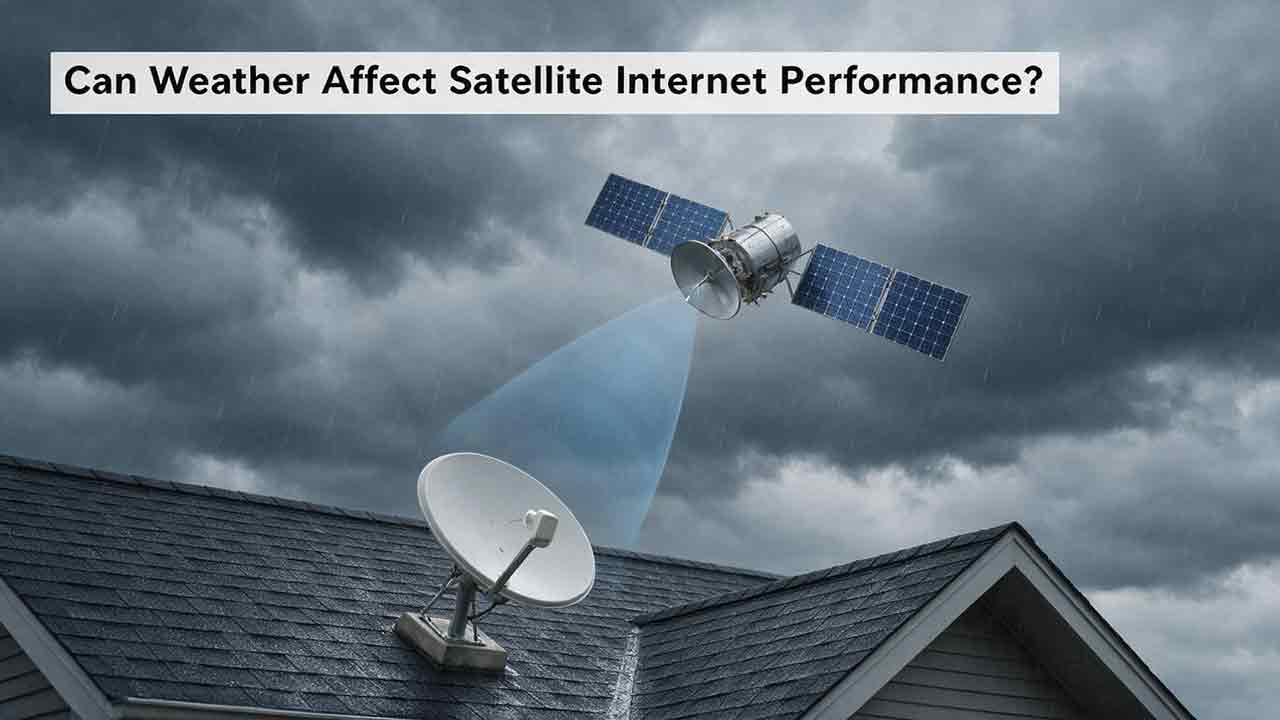
Can Weather Affect Satellite Internet Performance?
Weather can affect satellite internet performance, but the severity depends on the type of weather, signal frequency, equipment condition, installation quality, and network architecture. This guide explains how intense rain can cause temporary signal attenuation, why wet snow and ice may affect both the radio path and the terminal, and how wind, lightning, extreme temperatures, and power failures can disrupt service indirectly. It also explains why users may experience an outage under clear local skies when severe weather affects a distant provider gateway. To help readers diagnose problems safely, the article introduces the CosmoBasics Weather Impact Triangle, separating signal-path, terminal, and infrastructure risks. Readers also receive a practical troubleshooting process, a reusable weather incident log, common-mistake warnings, and a harsh-climate buying checklist. The guide relies on ITU, NASA, NOAA, FCC, and provider documentation while clearly distinguishing general engineering principles from model-specific equipment features.
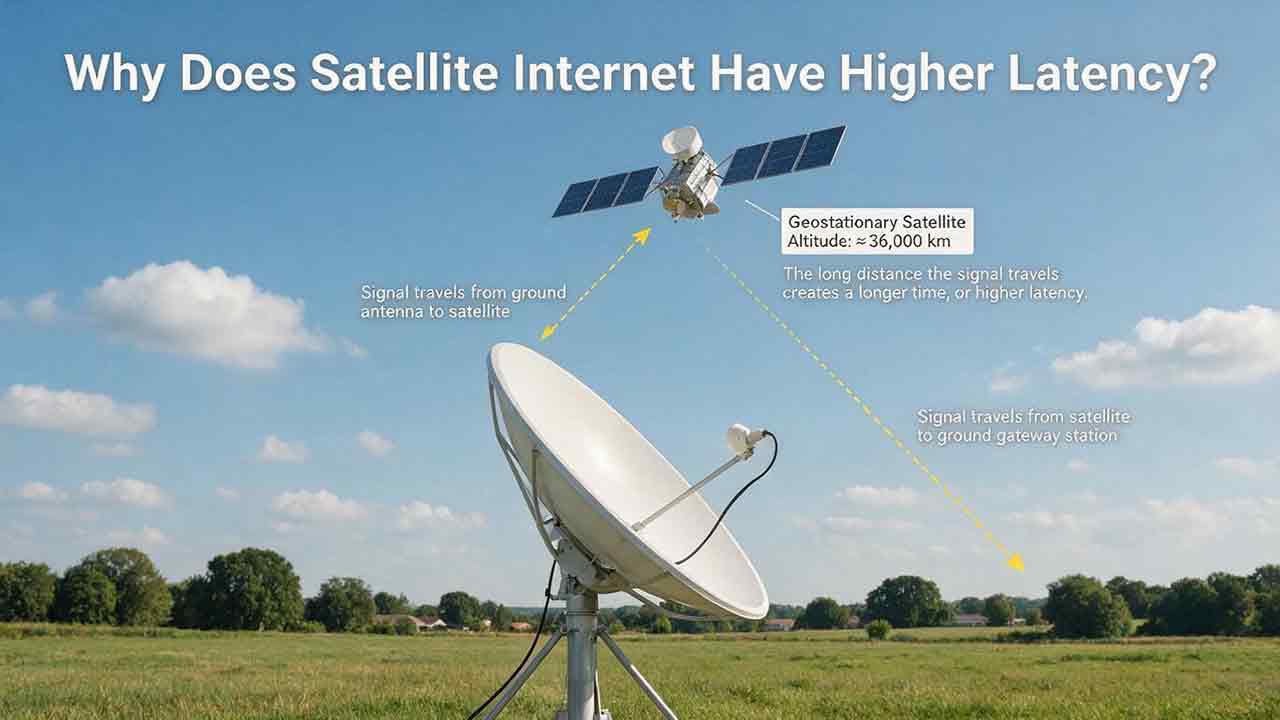
Why Does Satellite Internet Have Higher Latency?
Satellite internet often has higher latency because data must travel between a ground terminal, an orbiting satellite, a gateway and the wider internet before a response returns. This guide explains that delay through a transparent GEO propagation calculation, showing why an idealized four-leg path to a geostationary satellite corresponds to about 477 milliseconds before routing and processing are added. It also compares GEO and LEO architectures, clarifies the difference between bandwidth and latency, and examines how congestion, gateways, packet loss, Wi-Fi and upload saturation affect real-world performance. Readers can use the original Three-Layer Latency Framework, Two-Test Rule, diagnostic matrix and performance log to distinguish unavoidable orbital delay from provider-network or home-network problems. The article also helps rural households, remote workers and prospective buyers judge whether satellite latency is suitable for streaming, video calls, gaming, cloud applications and other everyday uses.
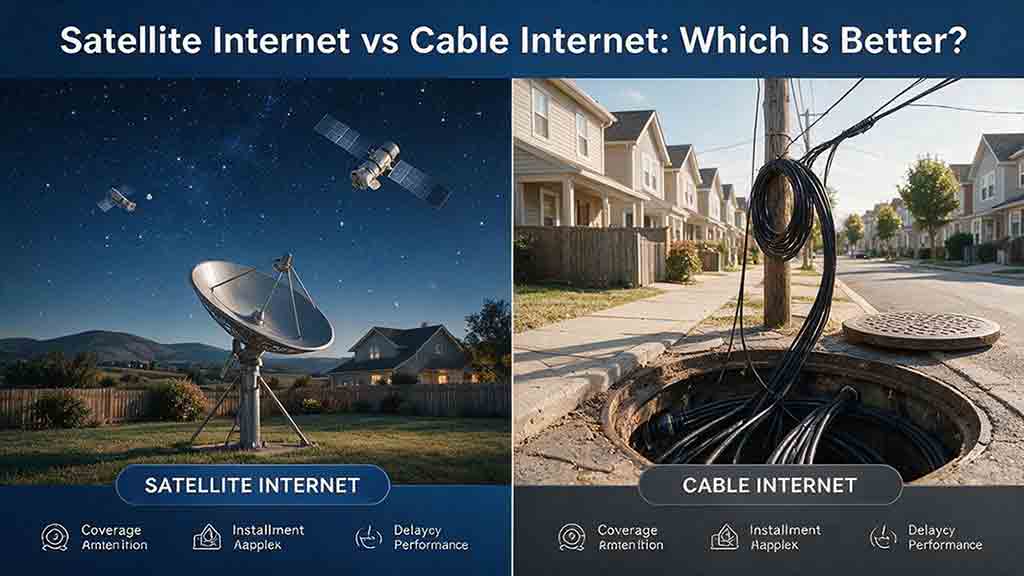
Satellite Internet vs Cable Internet: Which Is Better?
Cable internet is usually the stronger option when reliable service is available at a reasonable total cost, while satellite internet is often more practical for rural, remote, or difficult-to-wire properties. This guide compares both technologies across download speed, upload capacity, latency, reliability, data policies, installation requirements, and long-term cost. It explains why LEO and GEO satellite systems provide different user experiences and includes a transparent GEO propagation estimate, a household bandwidth example, and a rural installation cost comparison. Readers can also use the Eligibility-First Internet Selection Test to eliminate nonviable services, protect critical requirements, and score the remaining options according to their priorities. Reliability evidence, confidence levels, troubleshooting steps, and a detailed buying checklist help prevent decisions based only on advertised speed or promotional pricing. The article uses official FCC, NASA, CableLabs, Starlink, Netflix, and Zoom documentation while clearly separating published specifications from editorial calculations and planning recommendations.
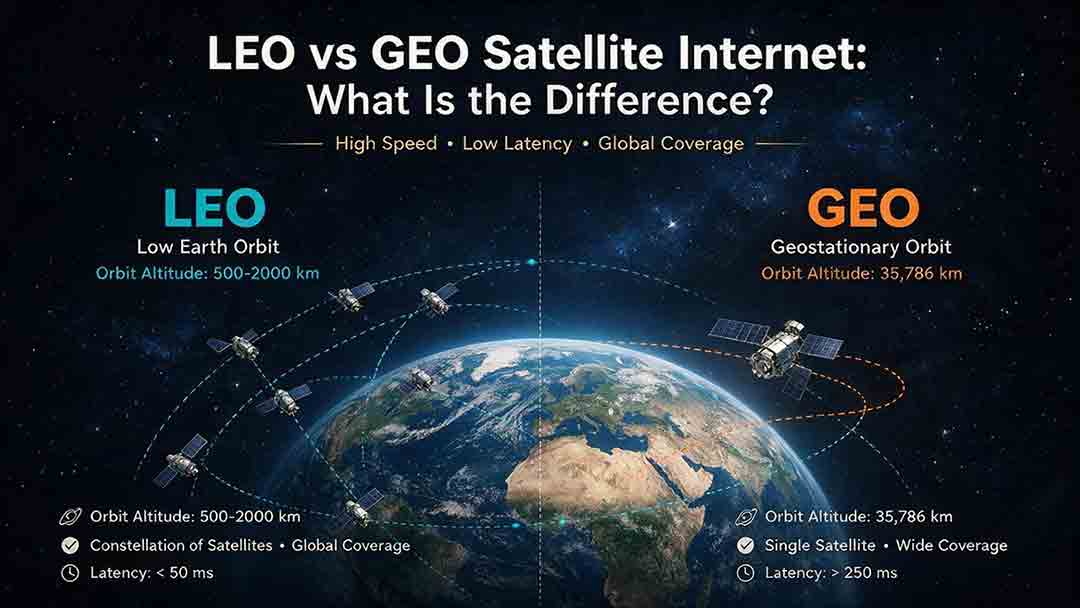
LEO vs GEO Satellite Internet: What Is the Difference?
LEO and GEO satellite internet differ mainly in orbital altitude, latency, coverage, and installation requirements. LEO networks use constellations of satellites moving relatively close to Earth, which generally provides lower latency for video meetings, remote desktops, cloud applications, voice calls, and many online games. GEO satellites remain in a fixed apparent position approximately 35,786 kilometers above the equator, allowing users to install permanently aligned dishes while receiving broad regional coverage. However, the longer signal path creates unavoidable propagation delay. This guide explains why orbit type does not determine download speed or reliability by itself. It compares network capacity, sky visibility, high-latitude coverage, weather effects, and address-level availability. Readers can also use the CosmoBasics LVC Decision Framework, worked propagation calculations, illustrative scenarios, six-step selection process, and buying checklist to evaluate whether LEO, GEO, or a terrestrial broadband service is the most practical option for their location.
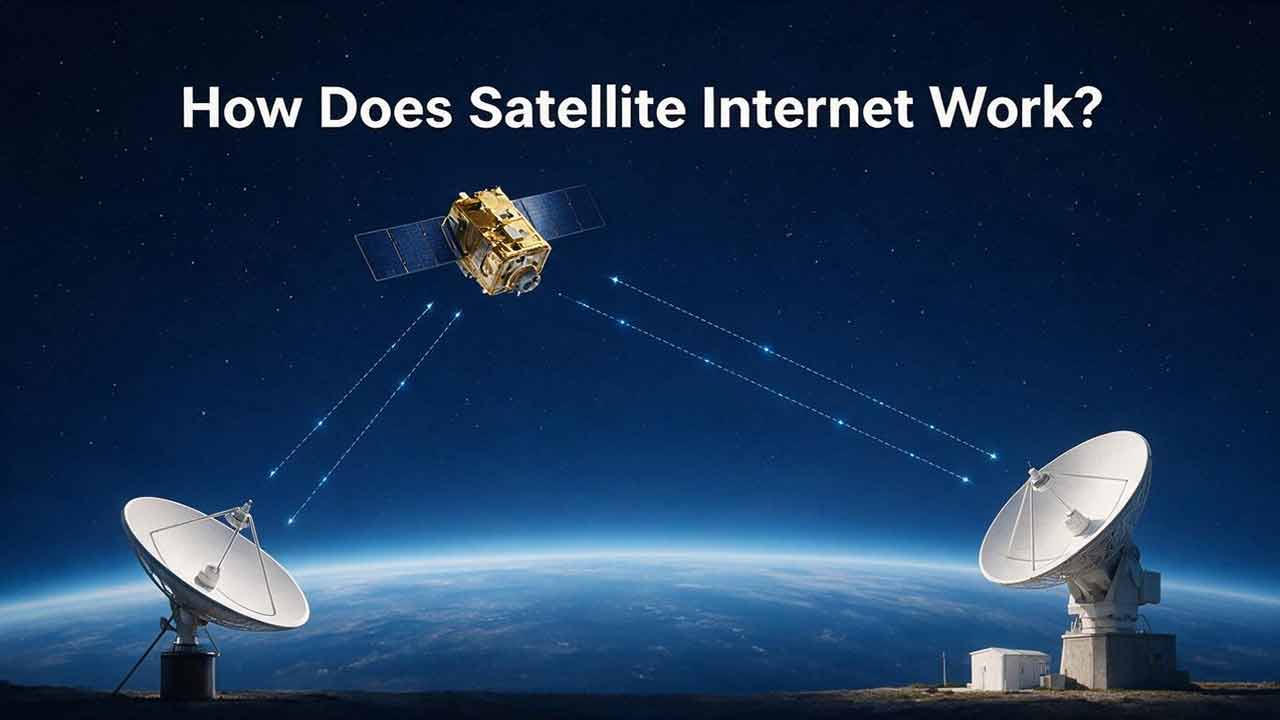
How Does Satellite Internet Work
Satellite internet connects users to the online world through a network of home antennas, satellites in orbit, and ground stations linked to internet infrastructure. This guide explains how satellite internet works step by step, including how data travels between Earth and space, why latency exists, and how LEO and GEO satellite systems differ. Beyond the technology, the article provides a practical framework for deciding whether satellite internet is the right choice based on location, availability, performance needs, installation conditions, and total cost. Readers will learn when satellite internet is a valuable solution, when fiber or other broadband options may be better, and what factors to consider before choosing a satellite connection.